
No, Boudoir Doesn't Mean "Bedroom" — Here's the Real Story
A few years ago, I was working with a digital marketing consultant who told me I should always use the phrase "boudoir photography" on my website — never just "boudoir" — because, as she put it, "boudoir is just the French word for bedroom."
I don't speak French. But I'd spent enough time researching this genre to know she was wrong. Chambre à coucher is the French word for bedroom. Boudoir is something else entirely — and its real origin is a lot more interesting than "bedroom," and honestly, a bit ironic.
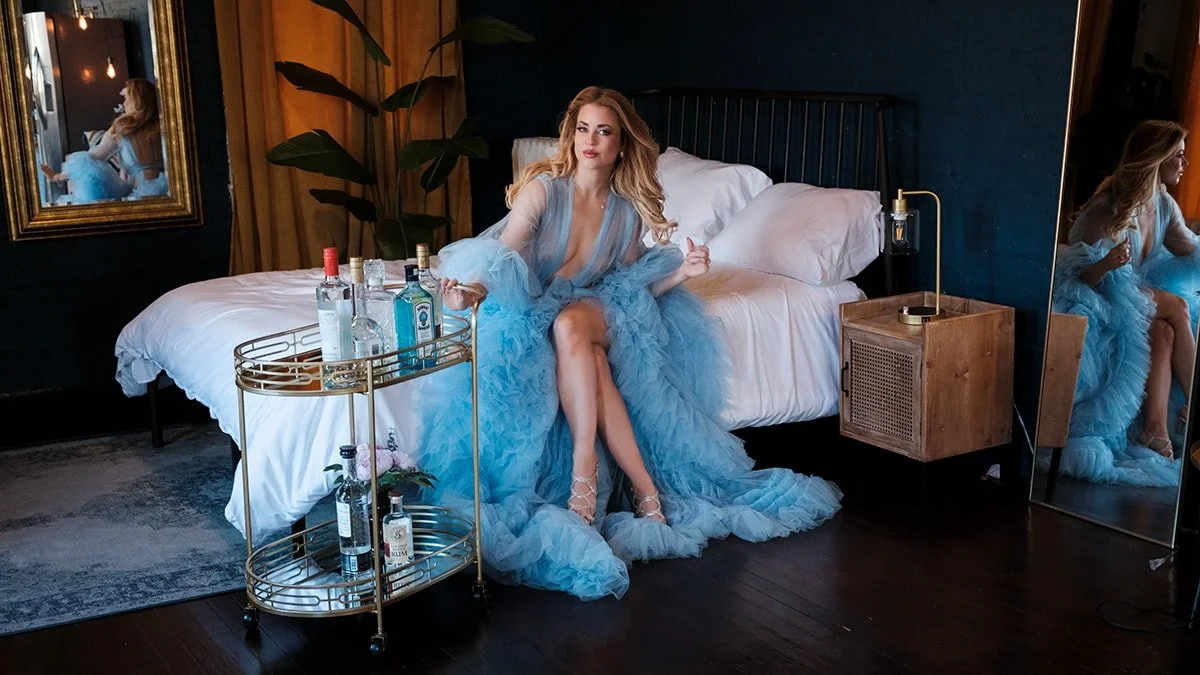
Modern boudoir studios tend to focus on bedroom sets.
A Room for Sulking
The word boudoir comes from the French verb bouder — to sulk, or to pout. A boudoir, in its original sense, was a "sulking room."
The story goes that in the private homes of 18th-century France, this was understood, half-jokingly, as the room a lady would retreat to when she was in a mood — somewhere to be alone with her sulking, away from company. It's a slightly backhanded bit of etymology. Coined by men, about a room women supposedly needed so their bad moods wouldn't have to be witnessed.
Not exactly a flattering start for a word that now describes an entire art form built around confidence.
How a Joke Became a Sanctuary
But words shift, and this one shifted dramatically.
As European homes moved away from single large communal spaces and began dividing into rooms with specific purposes, women of the aristocracy started claiming a private room of their own — often adjoining the bedchamber — the way men of status had long had a study or library to retreat to. The boudoir became that room.
In practice, it had nothing to do with sulking. It was where a woman could read, write letters, receive a close friend, or simply think — without an audience, without etiquette, without anyone's expectations but her own. The name stuck around long after the joke stopped being the point.
That's the real thread running from the 18th century to today: a boudoir was never really about a mood, or a room's furniture. It was about having one place that belonged to you, on your own terms.

The famous boudoir of Marie Antoinette was not a bedroom — it was a private sitting room.
If you're curious how that private 18th-century room eventually became a full photographic genre — through art, sensuality, and a few controversial early photographers — I wrote about that history here.
Why This Story Matters to Me
I think about that a lot in my own work. A word coined to diminish a woman's need for privacy eventually came to describe a genre of photography built entirely around women reclaiming exactly that — a space, a moment, an image that belongs to no one but them.
I didn't set out to make a linguistics lesson out of a client conversation. But every time I explain this to someone — a client, a marketing consultant, whoever asks — I'm reminded that the history behind this word is a pretty good description of what a boudoir session is supposed to feel like: private, personal, and entirely on your terms.
So no, boudoir doesn't mean bedroom. It means something a lot more personal than that.
